
Photo taken in Paris
Anthropologists, such as George Marcus, have often discussed the effectiveness of photos and film in comparison with text. But, for now, I would like to leave this debate aside to discuss what I think is an even more fundamental issue: determining the “meaning” of images. In the course so far, I have found that determining the “meaning” of an image (if such a thing exists) is an extremely difficult task on a variety of different levels. As someone who has a background in the visual arts, I think any understanding of any image (which, of course, is central in Visual Anthropology) must begin with a basic, elementary understanding of the philosophy and psychology of the medium itself before moving onto cultural and anthropological critique. So, during the first week, we were asked to take in a photograph, that we had taken ourselves, to our seminar for Visual Anthropology Theory (SE859). I brought in the photo above, which I took on a short visit to Paris earlier this year (the photo, coincidentally, looks almost exactly the same to a scene from Jean Rouch’s Chronique d’un été!) We were then told we must analyze each other’s photos, according to Marcus Banks’ three questions he poses for use in social research with pictures. These three questions are:
i) what is the image of, what is its content?
ii) who took it or made it, when and why?
and
iii) how do other people come to have it, how do they read it, what do they do with it?
While these questions represent one way of determining the “meaning” of an image, this opens up a whole other set of questions revolving around photography, visual media and the discipline of Visual Anthropology itself. As this is the first post in my blog, I would like to briefly introduce some of the important questions I have come across in my reading and experiences so far. I will do this, as I will in the rest of my posts on this blog, by discussing both my work (in this case, the photo I brought into my seminar) and the theories, opinions and research by other anthropologists I have read.
I found John Berger’s article The Ambiguity of the Photograph particularly thought provoking in its discussion of photography. Berger argues that photography’s raw materials are light and time, creating “unforeseeable consequences,” which he goes onto describe. His main argument is that, if we are shown a photo, there is irrefutable evidence that the event photographed existed. However, we do not know anything about this event. According to Berger, a photo preserves a certain moment in time, which isolates it, disconnecting it from time itself. But “meaning” is created through what connects; without connections, without a story, there is no meaning to anything (for instance, numbers and facts alone have no meaning). Therefore, when a photographer takes a photo, he is choosing or creating a representation of an event that gives it an appropriate past and future and, hence, a “meaning”. Of course, viewers of a photo may choose to apply other versions of a past and future. So, although it is irrefutable what a photo is of and that the event pictured existed, its “meaning” is unknown. Can a photo ever show “reality” or the “truth”? Berger concludes that “all photos have been taken out of continuity” and, most importantly, that “all photographs are ambiguous.”
But, of course, as Berger says, photos are also a “cultural construction,” not least in the sense that a photographer chooses what he wants to photograph (and, more importantly, what not to photograph). Of course, photos and photography are “cultural constructions” in more ways than just one, as I have seen in other readings. But, I thoroughly enjoyed Alan Klima’s article Corpore Obscuro: Meditation on the Dead in Thailand, which I thought exemplifies one aspect of this issue very well. According to Klima, Buddhists in the Thai monastery of Toong Samakhi Dhamm Temple meditate over corpses in meticulous detail, in order to confront the inevitability of death. After studying the corpse itself, the monk has a detailed image of the body in their mind that they can focus on as they meditate day after day for weeks on end. They literally obtain a photographic image of the corpse in their mind, so the actual physical object itself is no longer needed. This practice is strikingly similar to photography itself and, it is therefore quite ironic that the Thai government has forbidden the use of real corpses (as a result of British tabloid newspapers depicting the practice negatively) in favour of actual photographs. As a result, many Buddhist temples will, according to Klima, have autopsy photos on display to the public, often with captions reading “I was once like you. You will one day be like me!” I find this fascinating for two reasons. Firstly, it almost undermines Berger’s view that “all photos have been taken out of continuity”; rather, the Buddhist monks use photography to instill a sense of continuity in their lives. Secondly, and most importantly, Klima’s article shows that photography is, indeed, a cultural construct and that different cultures use it in different ways.
A similar point is made by Stephen Sprague in his article Yoruba Photography. In this article, Sprague explains how the Yoruba tribe in West Africa have largely replaced their traditional sculptures with photography and, in the process, created a distinct photographic style with very particular rules and subject-matter. Essentially, photography has been integrated into their existing culture. Whilst questioning whether photography is “universal” (rather than an art-form and mode of representation specific to the “western” world), Sprague concurrently highlights Berger’s view of photography as a “cultural construction.”
Now, let’s return to my photo. In the seminar, as the others analyzed the photo, people speculated on a variety of different aspects of the image. It was first thought that my photo was taken in a foreign country – perhaps the south of France. People questioned how long I waited until I took the photo. And, interestingly, it was thought that the photo must be of a place I was not familiar with; I had, apparently, clearly taken it out of discovery and curiosity. However, I found it amusing that nobody asked, for instance, whether or not I knew the people in the photo or with what sort of camera I took it with – both of which I thought would be crucial questions in understanding the meaning of the photo to me. In reality, I had waited perhaps 10 minutes to take the photo with a clear idea of how I wanted the photo to turn out. I did not know anyone in the photo, although Paris is a special city to me (I lived there for several months a few years ago). What’s more, I had taken it with a black-and-white disposable camera, something that I thought added novelty and interest to the photo. Yet, to others the “meaning” of the photo was entirely ambiguous: all they could do is speculate. So, I think that, while Banks’ three questions for social research with images are certainly useful, there is clearly much more to it. Photos are taken for many different reasons by many different people, for a variety of purposes and are then seen in a totally different way by different people and different cultures. We can barely agree on whether a photo really does represent the “truth” or “reality,” let alone what it means to someone.
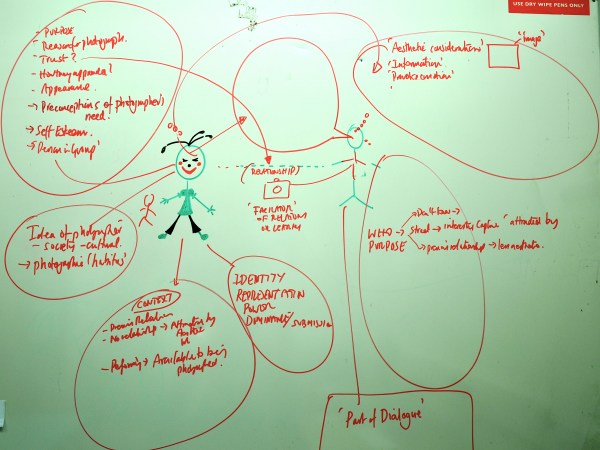
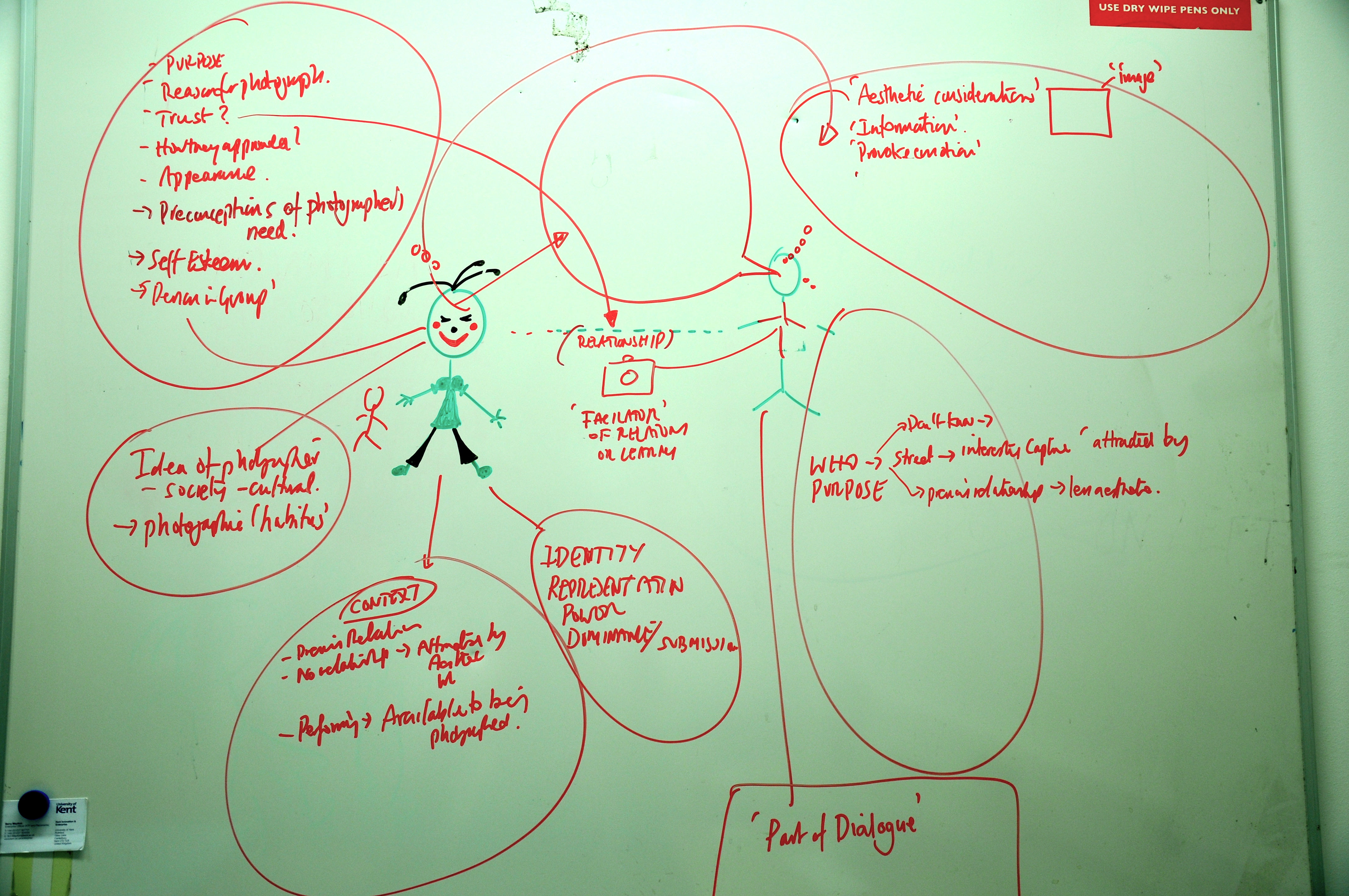
Photographer - subject relationship
Can a photo ever be the material realisation of the relationship between photographer and subject? This diagram explores the relationship between the subject and the photographer, and whether it can ever meet in the middle and become a true collaboration, or whether some vestige of power always still remains with the photographer? I’m just not sure…

[VIMEO 15547712]

[Vimeo 15963784]
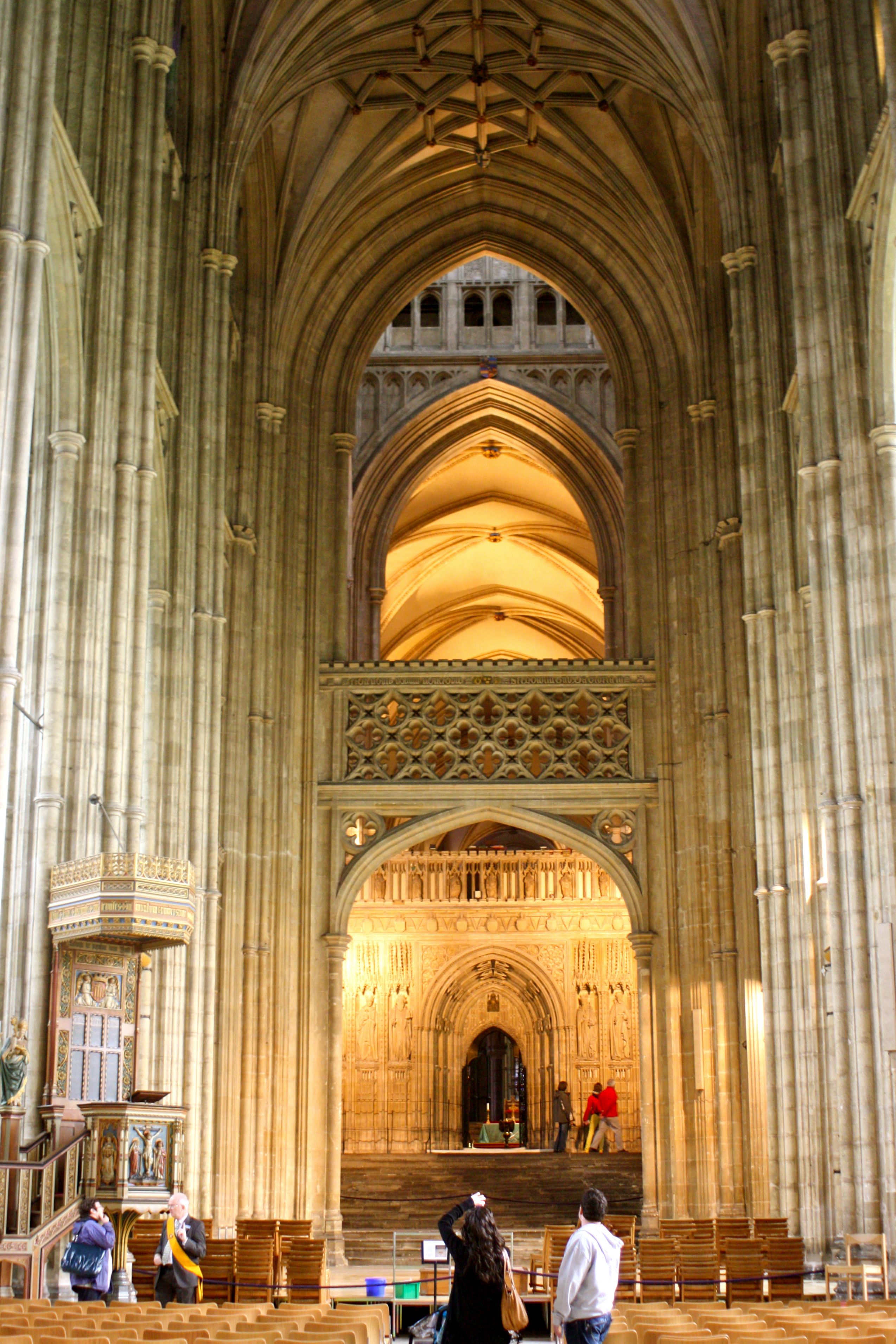
Canterbury cathedral
Enjoy the photo of Canterbury Cathedral while I learn to upload media into the blog:

2009, BA, Universidad Central de Venezuela – Anthropology
2010 (ongoing), University of Kent, Canterbury – Masters in Visual Anthropology
I recently graduated and started working in the production of a documentary film “El Silencio de las Moscas” (The silence of the flies), recently supported by the Jan Vrijman Fund, with Venezuelan documentary director Eliezer Arias. I have a general interest in documentary filmmaking and the anthropology of media.

Caroline B
MA Visual Anthropology – University of Kent 2010 – 2011
MSc Forensic Anthropology – Bradford University 2005 – 2006
BSc Anthropology – UCL 1997 – 2000
Well – how do I introduce myself? It’s almost impossible, except to say that I am continually curious about the world and how people live in it.
Having worked in the past as a forensic anthropologist in Iraq, Bosnia and the US, I have become aware of a disengagement (perhaps only in myself, but who knows where else) with communities. I want to re-engage, hence my return to academia. Studying visual anthropology seems to offer me an opportunity to push anthropolgical boundaries, try new technologies, and offer an engagment with public anthropology that I think can only be a positive thing.
My research interests are wide and varied, but some in particular are; forensic anthropology, mass grave investigation; ethics of forensic anthropology, local effects of international intervention, mental health, the body and movement, subversions of the body, death, dying and the memorialisation of death, children and their cognitive development, gender, new technologies, and subversive dissent.

Reuben Ross
2010: BA, University of Kent – Film Studies
2011 (ongoing): MA, University of Kent – Visual Anthropology
I recently graduated from the University of Kent with a BA in Film Studies. Therefore, with a background in film, I am particularly interested in cinema, documentary and ethnographic film in Visual Anthropology.
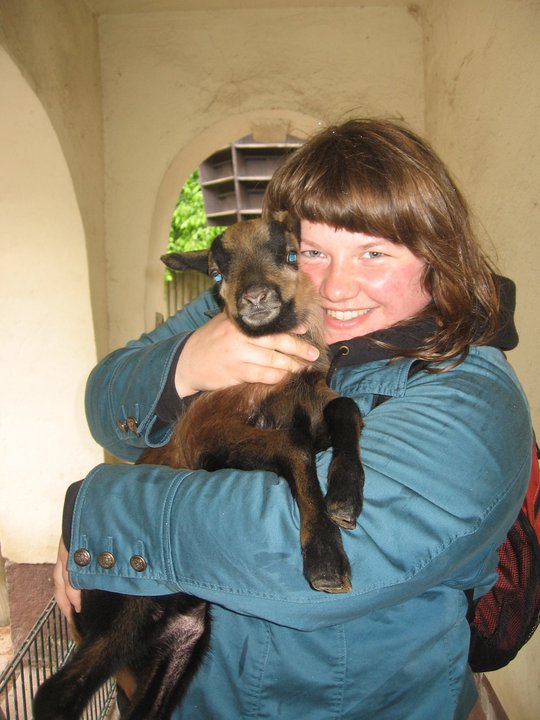
Sandy Wenger
2007 University of Stirling – BA with Hon. English Studies
I am a part time student at the University of Kent working to complete the second year of my MA in Visual Anthropology. I completed my undergrad at the University of Stirling in Scotland several years ago. Not in Anthropology, however, but in English Studies and Film & Media. The differences are not as big as they may appear at first and what I have learned before is very beneficial to what I am doing now.
 Kent Visual Anthropology (2010-2020)
You must be logged in to post a comment.